Skip to content

Enterprise lakehouse & data governance

Turn source records into traceable data products

Build ingestion, lakehouse layers, catalogs, analytics and enterprise knowledge systems with an open data stack. Keep source records traceable so teams can reuse operational data and documents in reports, search and later work.

ASCEND / BUSINESS EXPERIENCEILLUSTRATIVE
From source data to clear reports
SHEETSSYSTEMSSCHEDULES
BUILT AROUND THE WORK

When this service fits

When data definitions, sources or updates are inconsistent

Review sources, quality issues, access requirements and business uses. Then agree the datasets, reports or knowledge search to deliver.

  • Departments use conflicting definitions
  • Sources and quality cannot be traced
  • Knowledge and reporting depend on manual consolidation

TECHNICAL CAPABILITIES & SCOPE

What the engineering covers

Choose methods to fit your existing equipment, systems and project requirements.

Lakehouse layers & data access

Separate raw arrival, normalization and business-ready data so each stage has a clear purpose and quality expectation.

  • Apache Iceberg, Polaris and Trino for table management, cataloging and queries
  • Medallion layers: Landing → Bronze → Silver → Gold
  • Source ingestion, schema management and versioned data products
Governance, knowledge & business delivery

Make data ownership, quality and origin part of the system rather than a separate document nobody maintains.

  • Quality gates, lineage and source-to-product traceability
  • Qdrant-backed knowledge retrieval connected to governed document assets
  • Departmental catalogs, access responsibilities and documentation lifecycle
  • Business reporting, reusable datasets and source-aware knowledge answers

DELIVERABLES

What you receive

Agree the deliverables and acceptance criteria before work starts.

Data source and definition inventory

Source owners, data definitions, access scope and initial quality findings.

Lakehouse and ingestion workflows

Agreed layers, source connections and managed updates.

Governance and catalog

Quality rules, lineage, document catalog and versioned data products.

Business-ready outputs

Reporting datasets, dashboards or knowledge experiences, with ownership and update guidance.

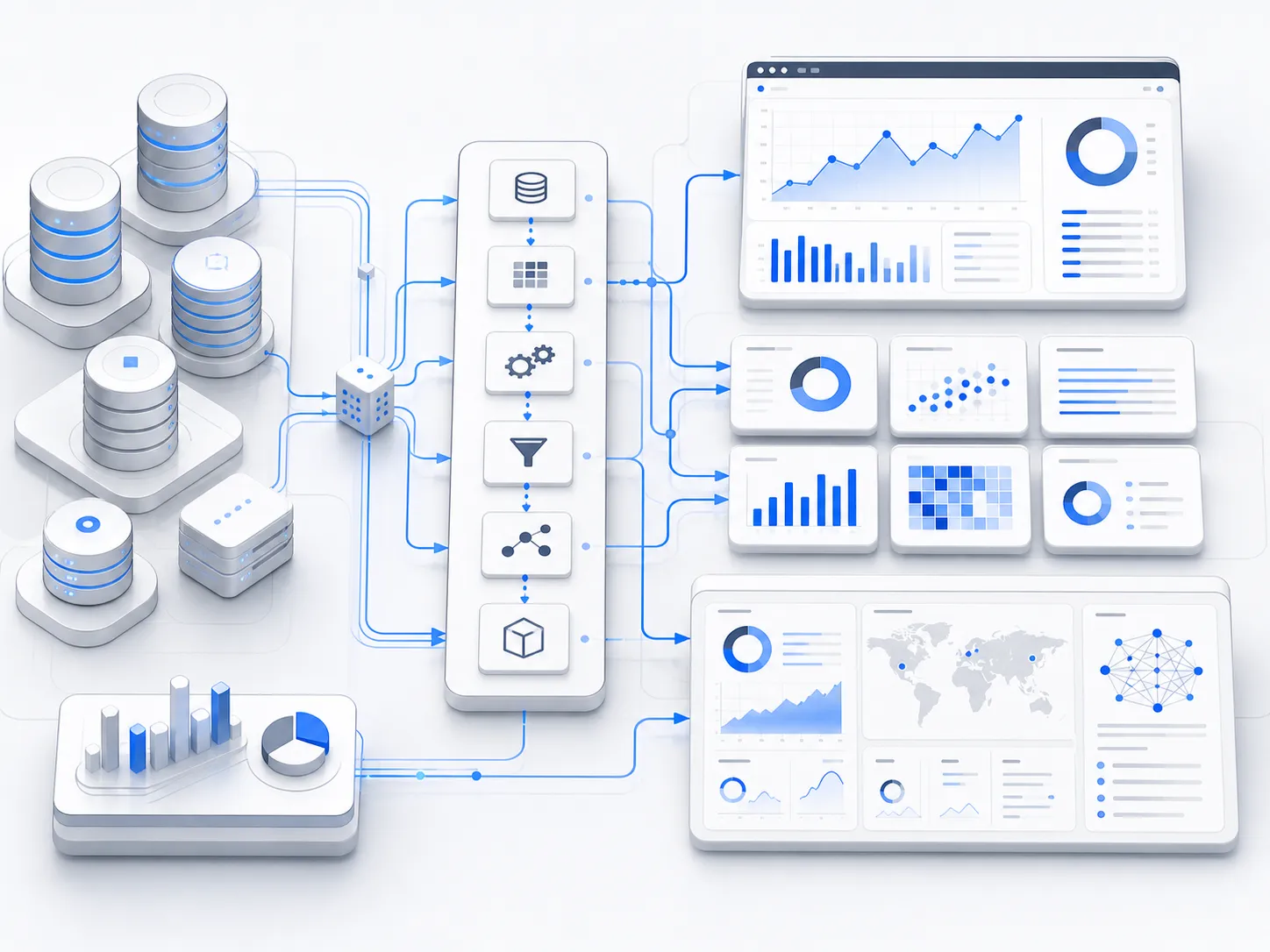
Illustrative flow from multiple data sources through processing to reports.
Concept illustrationExplains system relationships; not a client system screenshot.

Implementation and handover

Review the working result at each stage before agreeing further work.

  1. Review sources and definitions

    Check source data, documents, access constraints and intended uses. Agree processing scope, quality requirements and acceptance.

  2. Connect and reconcile

    Build data layers, catalogs, queries or retrieval in stages. Check representative records against their sources before deciding the next scope.

  3. Verify and transfer

    Record quality, lineage and access checks. Hand over data outputs, update procedures and operating responsibilities.

DEPLOYMENT & HANDOVER

Deployment, handover and ongoing responsibilities

Private delivery and existing identities

Deliver into the agreed customer environment, with AD / LDAP / OIDC integration where required. Define data migration, staged transition and any external-service dependencies before implementation.

Source-level assets and independent operation

For development work, hand over source, dependencies, deployment configuration, CI/CD definitions, interface/data documentation and operating guides. Usage, redevelopment rights and independent-build acceptance are agreed in the contract.

ACCEPTANCE

Agree what completion means

  • Representative data can be followed from source through the agreed layers to an output.
  • Quality failures are surfaced and handled according to the agreed rules.
  • Reported definitions and values reconcile with the approved business sources.
  • Authorized users can find current data or documents and their origin.
Discuss your acceptance criteria

BEFORE WE START

A few practical questions

Can you start with a few sources or just the reports?

Yes. Ingestion, governance, reports, knowledge search and handover can be scoped separately. Agree sources, metric definitions, update ownership and other system dependencies first.

How are cost, timing and performance targets agreed?

Review the existing environment and representative tasks first. Then agree milestones, expected scale, acceptance criteria and exclusions. Cost, timing and performance targets depend on that scope and the test conditions.

EXPLORE THE NEXT STEP

Discuss your project

Discuss your needs