Skip to content

Production AI applications & enterprise agents

Connect AI to everyday business tasks

Integrate GPT, Claude, Gemini, Qwen, DeepSeek, Whisper and other models without tying the application to one vendor. Support documents, speech, images and task agents, with integration scoped to the task. Handle failures, retain results, track per-call costs and meet agreed continuity requirements.

ASCEND / BUSINESS EXPERIENCEILLUSTRATIVE
Answers connected to sources
PDFHANDBOOKVERSIONS
Where should a new project start?
ANSWER · SAMPLE

Start with the users, current workflow and delivery goals. Bring them together in a brief the team can review.

↗ Project handbook / 01 Scope
BUILT AROUND THE WORK

When this service fits

When an AI prototype needs business integration or reliable operation

Review business tasks, sources, access permissions and existing systems. Agree model capabilities, human review and acceptance requirements.

  • A prototype is unreliable in daily use
  • Model costs and failures are difficult to track
  • An internal agent needs controlled access to business systems

TECHNICAL CAPABILITIES & SCOPE

What the engineering covers

Choose methods to fit your existing equipment, systems and project requirements.

Multimodal integration & production reliability

Connect the right model capabilities to the task while retaining control of the application’s behavior when dependencies slow down or fail.

  • Text, image, audio and video workflows with provider-neutral model adapters
  • Asynchronous queues, retries, circuit breakers and rate limiting
  • Persisted results, job status and cost metering down to individual calls
  • Hot switching without interruption within the agreed continuity scope
Enterprise knowledge & task agents

Combine traceable answers with controlled actions, using business identities and explicit human review where needed.

  • Document ingestion, retrieval-augmented generation and answers linked to sources
  • Role-aware knowledge access, source updates and evaluation datasets
  • Business tool connections, action permissions and human approval checkpoints
  • Task audit history, recovery from failures and quality/cost comparison

DELIVERABLES

What you receive

Agree the deliverables and acceptance criteria before work starts.

Integrated AI application

Agreed model capabilities, business interfaces and user workflows.

Operational controls

Task state, failure handling, result storage and usage/cost views.

Agent and knowledge assets

Approved knowledge sources, tool contracts, permission rules and evaluation cases.

Evaluation & source handover

Quality, latency, cost and failure evidence, plus source code and operating guidance.

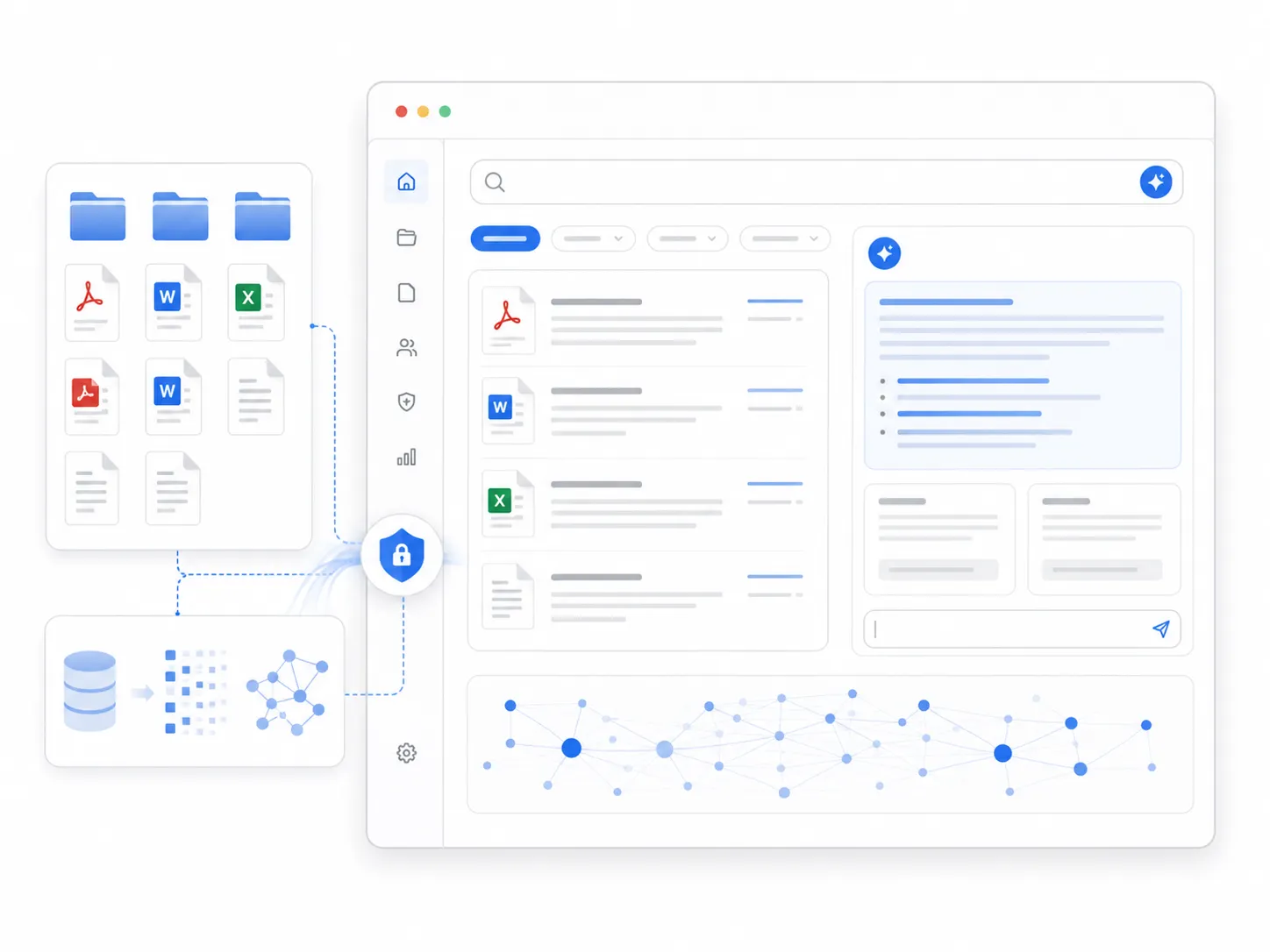
Illustrative document collection, retrieval interface and source-based answer view.
Concept illustrationExplains system relationships; not a client system screenshot.

Implementation and handover

Review the working result at each stage before agreeing further work.

  1. Agree tasks and access

    Check inputs, sources, business identities and system constraints. Agree acceptance for quality, speed, cost and failure behavior.

  2. Integrate and demonstrate tasks

    Connect models, retrieval and approved tools in stages. Review answers and actions on representative tasks before agreeing further work.

  3. Evaluate and hand over operations

    Record quality, latency, cost, failure and access checks. Transfer the application, evaluation materials and operating responsibilities.

DEPLOYMENT & HANDOVER

Deployment, handover and ongoing responsibilities

Private delivery and existing identities

Deliver into the agreed customer environment, with AD / LDAP / OIDC integration where required. Define data migration, staged transition and any external-service dependencies before implementation.

Source-level assets and independent operation

For development work, hand over source, dependencies, deployment configuration, CI/CD definitions, interface/data documentation and operating guides. Usage, redevelopment rights and independent-build acceptance are agreed in the contract.

ACCEPTANCE

Agree what completion means

  • Representative business tasks are assessed for quality, speed, cost and failure rate.
  • Retries and provider interruptions follow the agreed behavior without duplicate business actions.
  • Restricted knowledge and actions remain inaccessible to unapproved roles.
  • Each reviewed result can be traced to its source or job and attributable usage cost.
Discuss your acceptance criteria

BEFORE WE START

A few practical questions

Can you start with knowledge search and add task agents later?

Yes. Assessment, knowledge search, model integration, agent modules and handover can be scoped separately. First agree sources, business interfaces, permissions and other teams’ responsibilities, then decide the next step.

How are cost, timing and performance targets agreed?

Review the existing environment and representative tasks first. Then agree milestones, expected scale, acceptance criteria and exclusions. Cost, timing and performance targets depend on that scope and the test conditions.